
In blackjack, your goal is to have a hand that is closer to 21 than the dealer’s, without going over 21. But what happens if you and the dealer have exactly the same hand value? When this happens, it is called a push. In this article, we explain what a push is, when it occurs and what it means for your blackjack bet.
What is a push in blackjack?
A push occurs when you and the dealer have the same hand value at the end of a blackjack round. This can happen with, for example, 17, 18 or 20. Neither side wins or loses, and your original bet is returned. A push can also occur when both you and the dealer have 21 with multiple cards.
However, a natural blackjack, consisting of an ace and a card worth ten as the first two cards, is treated differently. If you have a natural blackjack and the dealer reaches 21 with three or more cards, you normally win according to the applicable blackjack rules. The exact rules can vary depending on the blackjack variant.
What happens to your bet in a push?
With a push, your original bet is returned. You therefore do not make a profit, but you also do not lose the amount you wagered.
For example, suppose you bet €10 and end the round with the same hand value as the dealer. You get your €10 back. Your balance therefore does not change as a result of that particular bet.
This differs from a winning blackjack hand. If you win a regular blackjack hand with a €10 bet, you normally receive your original bet back plus your winnings. With a push, you only receive your original €10 back.
Is a push the same as a tie?
Yes. In blackjack, the terms ‘push’ and ‘tie’ generally refer to the same result: you and the dealer have the same hand value, so neither side wins.
The term ‘push’ is commonly used in blackjack to describe this result. In a game, you may also come across terms such as ‘push’, ‘tie’ or ‘stand-off’.
Regardless of the term used, the basic result is the same. The round has no winner and your original bet is returned.
What if you and the dealer both have blackjack?
This situation will normally also result in a push. If both you and the dealer have a natural blackjack, the two hands are equal and your original bet is returned.
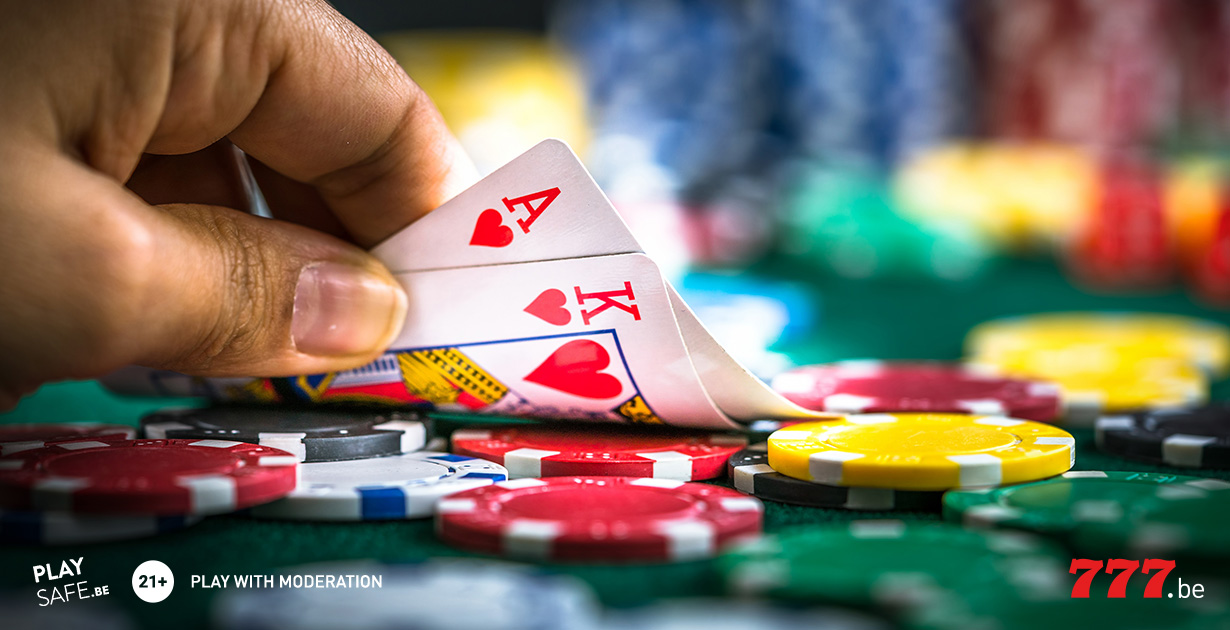
For example, suppose you receive an ace and a king. You have a natural blackjack. If the dealer also has an ace and a card worth ten, you both have a natural blackjack. The result is then a push.
This is different from a total of 21 with more than two cards. The distinction between a natural blackjack and a regular 21 is important because special blackjack payouts can apply specifically to a natural blackjack.
The rules of the particular blackjack variant determine how these situations are handled.
Does a push give the casino an advantage?
A push does not generate a profit for the casino on its own. You get your bet back, so you do not lose that particular hand.
However, pushes are part of the overall mathematical calculation of blackjack. The house edge is determined based on all possible outcomes, including player wins, dealer wins, blackjacks and pushes.
A push therefore does not mean that a blackjack game has no house edge. Over a large number of rounds, the casino’s advantage depends on the complete set of rules and the probabilities associated with them.
Factors such as the number of decks, the blackjack payout, the rules for doubling and splitting, and the way the dealer plays can all affect the house edge.
Can you get a push after doubling?
Yes. A push can also occur after doubling if your final hand has the same value as the dealer’s.
When doubling, you increase your original bet, usually by the same amount as your initial bet. You then typically receive one more card and must stand.
Suppose you bet €10 and then double, bringing your total bet to €20. If your final hand is worth 18 and the dealer also has 18, the result is a push. You receive your full €20 bet back.
The same principle applies when the amount wagered has changed in another way. With a push, you receive the bet associated with that hand back, but you do not receive any winnings.
How does a push affect your blackjack strategy?
A push does not require a separate betting strategy. It is simply one of the possible outcomes of a blackjack hand.
Your decisions during the hand should be based on the applicable blackjack rules and, where relevant, a basic strategy chart. The fact that a push is possible does not mean you should change your decisions to try to avoid a tie.
It is also important to remember that each blackjack hand stands on its own. A series of pushes does not make a win or loss in the next hand more likely.
Frequently asked questions
Can you get a push when there are multiple players at the table?
Yes. The result of your hand depends only on the comparison between your cards and those of the dealer. Other players at the table do not affect this.
Does a push occur more often with certain hand values?
A push can occur with different hand values. There is no specific hand value at which a push is guaranteed or automatically occurs. The chance of a push depends on the possible card combinations for both the player and the dealer, and therefore on the rules of the blackjack variant.
What is the difference between a push and a dealer blackjack?
With a push, the player and dealer have the same hand value and the player gets their bet back. With a dealer blackjack, the dealer has a natural blackjack while the player does not. In that case, the dealer wins and the player loses their bet.